
Tips
Bass Fishing Tips For Beginners
The bass is one of the most popular game fish. They live in lakes, reservoirs, ponds, and rivers and are the fish of choice for many anglers.
How To Fish For Bass
Where To Look For Bass
The process of learning how to catch bass starts with finding the right spot.
Some anglers prefer to spend the majority of their time on a boat or from shore while others like to use a pier or bridge.
Once you have settled on your approach you can begin to determine where to fish for bass. Bass are often either holding tight to a piece of cover or cruising around looking for food.
Bass fishing usually involves casting, dropping the bait or lure in front of the fish, and then reeling it in.
Cast your lure into the water, ideally so it lands next to or just behind the cover the bass are hiding under.
In still water, you can make this happen by casting the lure right next to the structure.
In moving water, you will need to cast a little distance from the structure.
Once you cast, wait a few seconds for your lure to sink and then start reeling it toward you.
If you are fishing in a boat or on a pier, the best technique is to cast right in front of the structure and let your lure sink to the bottom before reeling in.
If you are shore casting, try to cast so that you lure lands to the side of the structure and just ahead of the fish.
The idea is to cast into or next to places that bass will hide under and then reel in your lure slowly as it gets near the fish.
In still water, this slow reeling will allow you to entice the bass to strike as your lure passes by.
In moving water, waiting a few seconds before starting to reel will allow your lure to get down to the bottom and pass by the bass without alarming them.
This slow and steady approach will help you land more fish.
What Type Of Bait Should You Use To Catch Bass?
Bass are often caught on artificial lures such as spinnerbaits, crankbaits, jigs, plugs, and soft plastic baits. However, in some situations, live bait can work exceedingly well.
Each of these lures uses a different technique to appeal to the bass’ senses and trigger them to strike. To help you choose what kind of lure you want to use, here is a brief description of each type of lure.
Spinnerbaits
Spinnerbaits are metal lures with multiple blades that spin in the water when you reel them in. These spinning blades create vibrations in the water that attract bass. Anglers will cast spinnerbaits into locations where bass are holding and reel them in slowly so that the blades spin and create a disturbance in the water. This is often called fishing slowly with a spinnerbait.
Spinners come in a variety of sizes, shapes, and colors. The best choice for beginners is a medium-sized blade with a silver or copper finish that has gold or silver rattle balls in it.
Crankbaits
These are lures that have an arm on them that moves up and down when you reel them in. The arm pushes water back and forth inside the lure which creates a disturbance in the water. The movement of the crankbait attracts bass by imitating small fish or amphibians.
Crankbaits come in a variety of sizes, colors, and designs.
Anglers use crankbaits in still water or over structures like hydrilla, weeds, logs, rocks, and standing timber.
Crankbaits can be fished in a couple of ways. The first is with a slow steady retrieve. This will entice bass to strike when the lure passes by them.
Another way to use a crankbait is to reel it in quickly. Bass often will hit the crankbait while it is moving fast and you are reeling in rapidly. This is called jerk baiting.
The best crankbaits for beginners are simple 1 or 2-piece metal lures with a blade that has a silver or copper finish and gold or silver rattle balls inside.
Jigs
Jigs are small lures that have an offset hook. The hook is attached to a weight and then a jigging device is attached to the jig head. Often, an artificial lure will be tied to the jig head.
Some of these jigs are designed to be fished with a slow steady retrieve while others should be used with a fast reel in.
The best jigs for beginners are straight shank jigs with a cone-shaped head. The cone shape helps prevent the jig from getting hung up on weeds and brush.
The straight shank on the jig head means that the hook is pointed straight down. This helps keep the jig from getting caught on various structures and avoids snags.
Soft Plastic Baits
Soft plastic baits are lures made out of plastic that is designed to look and feel like live bait. Soft plastics are used in both still and moving water but they work best in calmer waters.
When using soft plastic baits for bass fishing, anglers cast them into the cover where they want to catch bass. The lure sinks down to the bottom and then they slowly reel it back in.
The most common soft plastic bait is a worm-like jig with an attractant scent covering it. They come in a variety of colors, sizes, and shapes.
A Texas or Carolina rig is often used to give the bait more action.
With a Texas rig, you tie the worm on with a slip knot and then pull the hook through the plastic part of the plastic jig head.
With a Carolina rig, you use a swivel to tie the plastic worm on and then thread the worm onto your line.
This lure works best when you slowly reel in as it gets near the fish. This longer retrieve is more appealing to bass because it gives them more time to inspect and strike the lure.
Frog Lure
Frog lures are often used when bass are spawning. They are a soft plastic lure that is designed to look like a small, live frog.
These lures come in a variety of colors, sizes, and actions.
Frog lures do not have to be retrieved slowly but they can be effective if you reel them in at a slow pace. Frog lures work best when cast into shallow cover where bass are holding and then you slowly reel the lure back in.
Spider Lure
Spider lures are small plastic tubes that have a thin body and legs protruding from the bottom. The legs move in the water as you reel in the lure. This movement attracts bass because of its similarity to a small, live spider.
Cricket Lure
Live Bait
Live bait such as minnows, crickets, nightcrawlers, leeches, and other worms are effective at catching bass.
Your best bet is to use live bait while fishing in still water. In moving water, live bait is not very effective because the current will quickly move it away from the fish.
The most common type of live bait are nightcrawlers. Live worms are used for lily pads, docks, and vegetation because they break the surface tension of the water and allow bass to see them more easily. Nightcrawlers can be used on or just below the surface.
Both techniques work best when you cast them directly under and in front of the bass you are trying to catch. As the worm sinks, slowly reel it in. The slow retrieve will attract the bass and make them more likely to strike.
When using live bait with a hook or jig, either use a slip knot or a swivel to tie the hook or jig on. This will prevent the live bait from getting stuck on structures or your fishing line.
How Does Weather Affect Bass Fishing?
While you can catch bass all year long, some times and seasons are better than others.
The best times to fish is generally spring and fall.
For bass it may change slightly depending on your geographic position, as bass like the water temperature to be around 68-74 degrees. This is the optimal time of year because it gets bass to feeding aggressively.
When the water temperature gets above 75 degrees, bass will spend more time in deeper waters and will be harder to catch.
Bass fishing is best in the morning and evening hours when the water is cooler and there is not a lot of light. This is especially true with clear or shallow water.
There are several factors that can change the temperature of the water such as wind, sunlight, cloud cover, and precipitation.
Persistent Patience Pays Off
The most important factor in bass fishing is persistence. It can take time to learn how to catch bass. Sometimes it can take hours to fish just one spot. If you spend an entire day trying one area and do not catch any bass, go try somewhere else.
Bass fishing is a lot like gambling. You sometimes have to put in a lot of work before you see any results. Persistence is the best way to practice patience, which is an important skill to have when fishing for bass.
So in the end the key to bass fishing is patience.
The fish will not always be biting and you must be willing to wait for them to strike.
When you learn how to catch bass, you can explore the many different species of bass and distinguish between which ones you like to eat and release.
As your skill as an angler increases, you can move onto more challenging waters where you may encounter lunker bass that can reach over 10 lbs.
The best way to learn how to fish for bass is to get on the water and throw your line in!
As an Amazon Associate I earn from qualifying purchases.
Table of Contents
Table of Contents
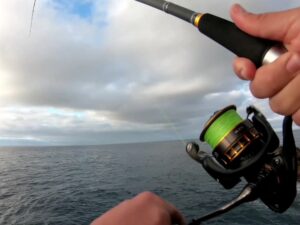
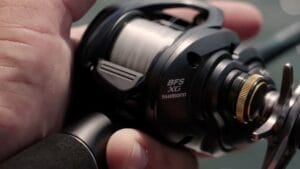
Shimano Curado BFS Baitcasting Reel Review
Discover how the Shimano Curado BFS brings finesse baitcasting to the U.S. market, offering ultralight lure performance with baitcaster precision. After months of testing on top Alabama fisheries, this reel proved to be a game-changer for technical anglers. Curious if it’s right for your setup? Read the full review to find out.
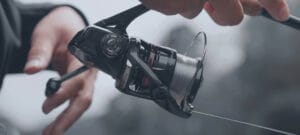
Shimano Vanford FA Spinning Reel Review
Positioned as the spiritual descendent of the legendary CI4+ Stradic and the evolution of the previous Vanford, this reel isn’t just an update—it’s a complete reimagining of what a finesse-focused spinning reel can be.
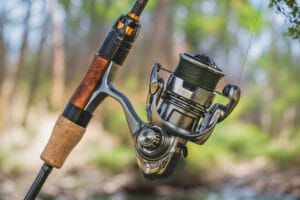
Daiwa Exceler LT Spinning Reel Review
The Daiwa Exceler LT spinning reel combines premium features with mid-range pricing, offering anglers a lightweight design, smooth ATD drag system, and versatile 6.2:1 gear ratio. Our extensive field testing reveals exceptional value for finesse fishing techniques.