
Reels
10 Best Spinning Reels for Bass Fishing
Looking for a new spinning reel for bass fishing? We cover the 10 top spinning reels that work perfectly for bass fishing. Find your perfect reel below!
Why choose a spinning reel for bass fishing?
Spinning reels may not be as popular among tournament bass anglers as baitcasting fishing reels, but that shouldn’t deter you from getting one.
Why?
The answer is simple: they’re dependable, versatile, affordable, and easy to use!
Spinning reels have a lot of advantages, especially for hobbyists or new bass fishermen. They provide a solid and dependable drag system, they’re easy to learn how to use and are often relatively inexpensive.
You can even get some decent models for under $50.
Top 10 Best Spinning Reels for Bass
Not quite sure what you’re looking for in a spinning reel? Click here to skip below and read more about choosing the best spinning reel for your application.
So what are the best spinning reels for bass fishing? Let’s take a look.
SHIMANO Miravel Spinning Reel
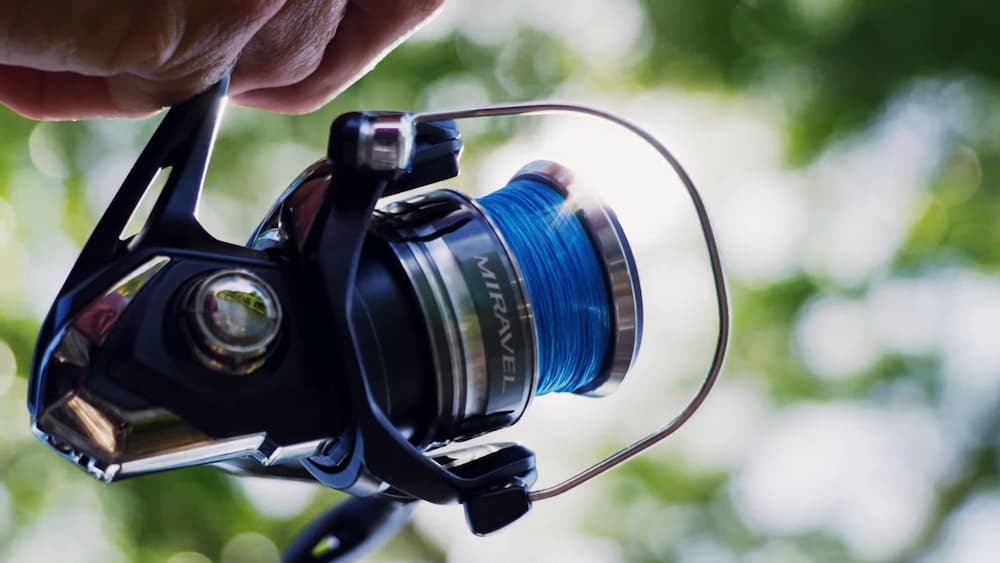
- Size: 2500HG
- Gear Ratio: 6.2:1
- Mono Line Capacity (yards/lbs): 120/10, 140/8, 200/6
- Braid Line Capacity (yards/lbs): 100/30, 145/15, 150/10
- Max Drag: 20 lbs
- Weight: 7.2 ounces
The Shimano Miravel Spinning Reel is a high-performance reel designed for multi-species anglers. With its lightweight CI4+ composite material construction and Hagane Gear design, the Miravel provides anglers with a reliable and durable reel that is ideally suited for freshwater or inshore fishing.
The Miravel has a MagnumLite Rotor, which reduces the amount of force needed when reeling and increases the winding rate. The Propulsion Line Management System provides effortless casting and reduces line friction and tangling. SilentDrive technology provides quiet performance, and X-Ship offers optimal protection.
The Miravel features Shimano’s G-Free Body, which provides improved balance and weight distribution. This reduces strain on your arms and shoulders and increases comfort during extended fishing periods.
Designed with CI4+, the Shimano Miravel is extremely durable and won’t rust or corrode. It is lightweight and offers excellent performance and comfort. It is designed to handle a variety of line options, including monofilament and braided lines.
It features a 5+1 bearing system for enhanced control while the Cross Carbon Drag provides exceptionally smooth drag and increased power with a max drag rating of 20 lbs.
The Shimano Miravel is a great option for anglers looking for a reliable, durable, and lightweight spinning reel. It features cutting-edge technology and provides optimal performance, comfort, and balance. All at a price that might surprise you.
Shop Online for the SHIMANO Miravel
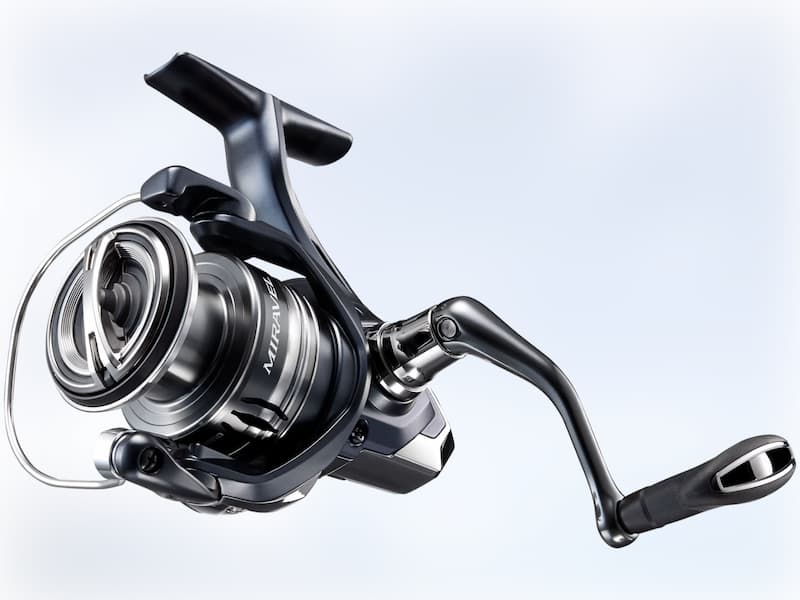
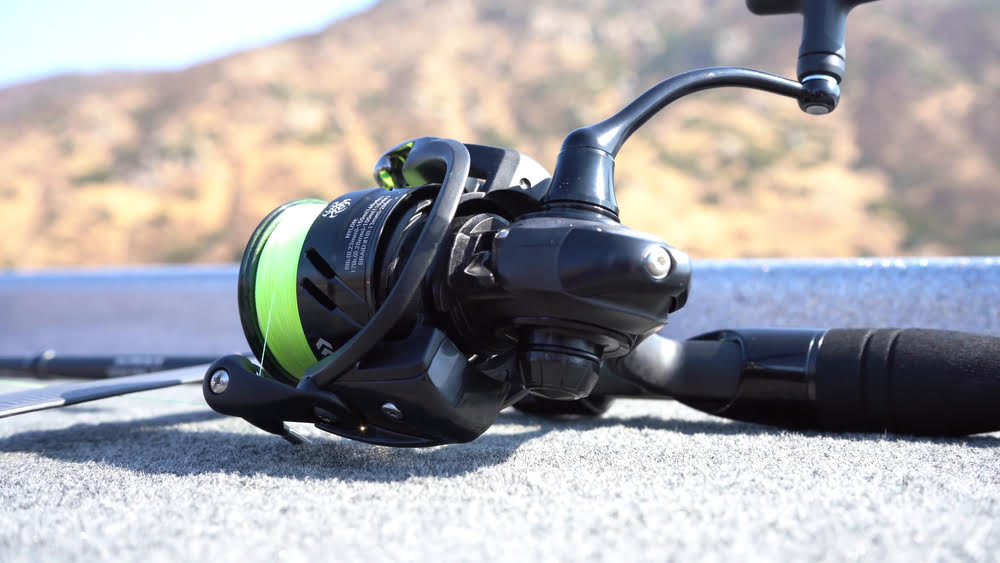
Daiwa Tatula LT Reel
- Size: 2500
- Gear Ratio: 6.2:1
- Mono Line Capacity (yards/lbs): 160/12, 210/10, 240/8
- Braid Line Capacity (yards/lbs): 185/15, 250/10
- Max Drag: 22 lbs
- Weight: 6.2 ounces
The Daiwa Tatula LT spinning reel is a state-of-the-art fishing reel that is designed for bass fishing. It features a Zaion carbon-strain body and an air rotor that is 15% lighter than other materials yet provides enhanced strength. The reel has a 7-bearing system and a machined cut handle for smooth reeling.
The reel feels solid and well-balanced in your hands. It has a sleek, black finish with red highlights that visually stands out. It has a lightweight feel, but with its durable Zaoin build, 22 lbs max drag, and 6.2:1 gear ratio it’s designed to easily handle larger fish.
The 2500 or 3000 size of the Tatula LT is a great choice for bass fishing. It is easy to use and comfortable to grip. The drag system is smooth and user-friendly. The reel pairs well with a variety of rods and it the right weight and form factor that makes it a perfect reel for kayak fishing.
The Daiwa Tatula LT is a great choice for both experienced and novice anglers. It is lightweight, strong, and easy to use. It is the perfect combination of performance, comfort, and durability. We highly recommend for bass fishing.
Shop Online for the Daiwa Tatula LT
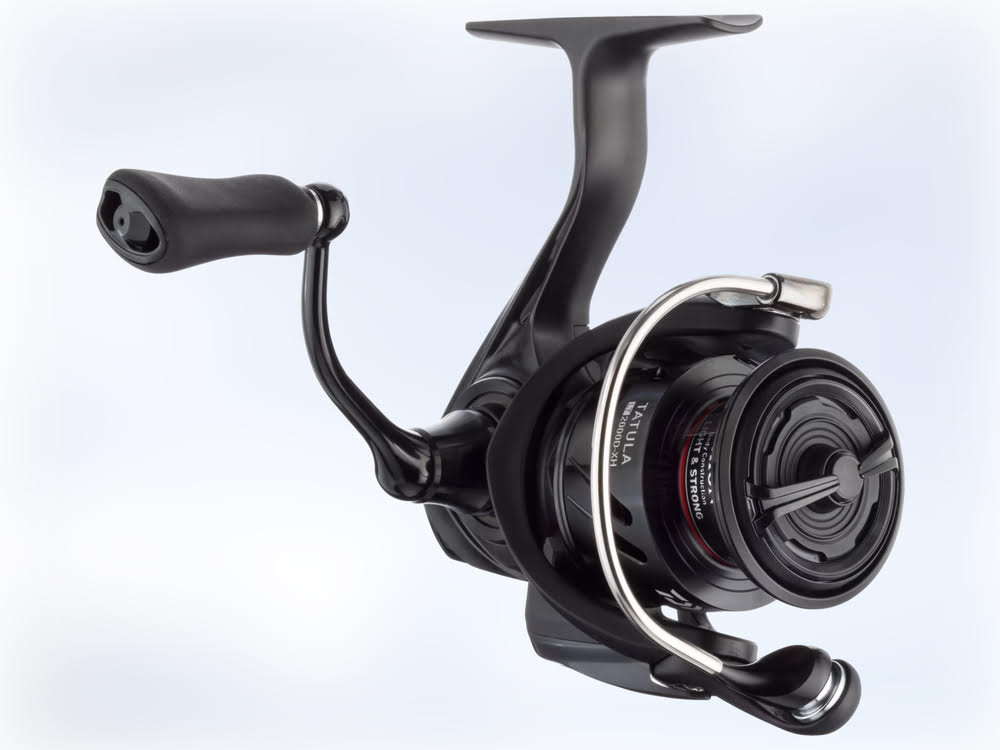
Shimano Vanford Spinning Reel
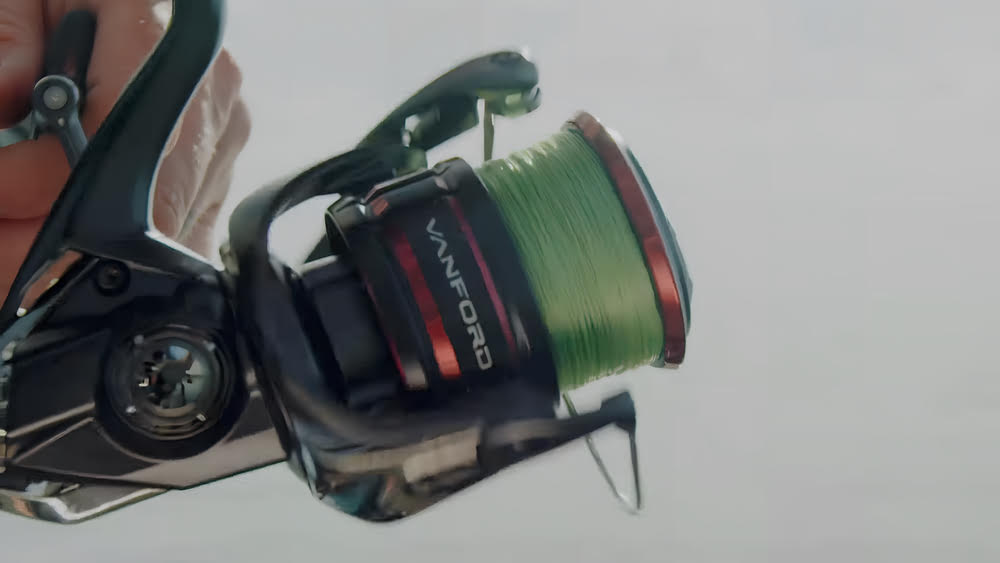
- Size: 2500HGF
- Gear Ratio: 6.0:1
- Mono Line Capacity (yards/lbs): 120/10, 140/8, 200/6
- Braid Line Capacity (yards/lbs): 100/30, 145/15, 150/10
- Max Drag: 20 lbs
- Weight: 6.3 ounces
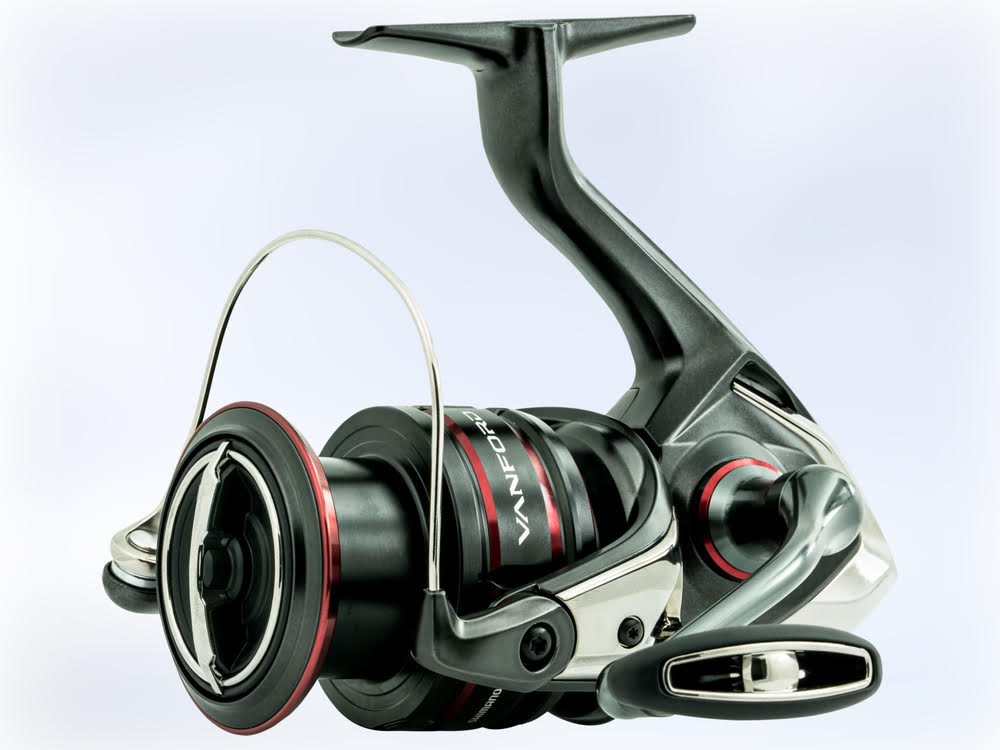
The Shimano Vanford spinning reel is a powerful and versatile spinning reel that offers performance and durability in any fishing environment. The Vanford is designed with a lightweight feel and carbon rigidity, and features a powerful 6.4:1 gear ratio.
The Vanford’s cold-forged HAGANE Gear provides unparalleled strength, and the Aero Wrap II Technology creates two distinct layers of line on the spool, reducing friction for smoother, more efficient casts. The reel also features silentDrive and MicroModule Gear II Technologies for smooth, vibration-free performance, and Cross Carbon Drag for enhanced range of drag settings.
The Shimano Vanford spinning reel is also equipped with X-Protect technology, which protects it from dust and water and increases its durability. The G-Free Body technology provides improved balance and control, increased sensitivity, and reduced fatigue.
The Shimano Vanford is incredibly lightweight yet powerful enough to handle bigger lures or bigger fish if necessary. The MagnumLite (MGL) Rotor technology reduces rotational inertia by up to 48%, and the Long Stroke Spool Technology helps increase casting distance and reduce line twist and tangles.
The Shimano Vanford spinning reel is a great choice for anglers looking for a durable, powerful spinning reel that can handle a variety of techniques. It is lightweight yet powerful, durable, and offers smoothness and casting distance that make it perfect for any fishing environment.
Shop Online for the SHIMANO Vanford
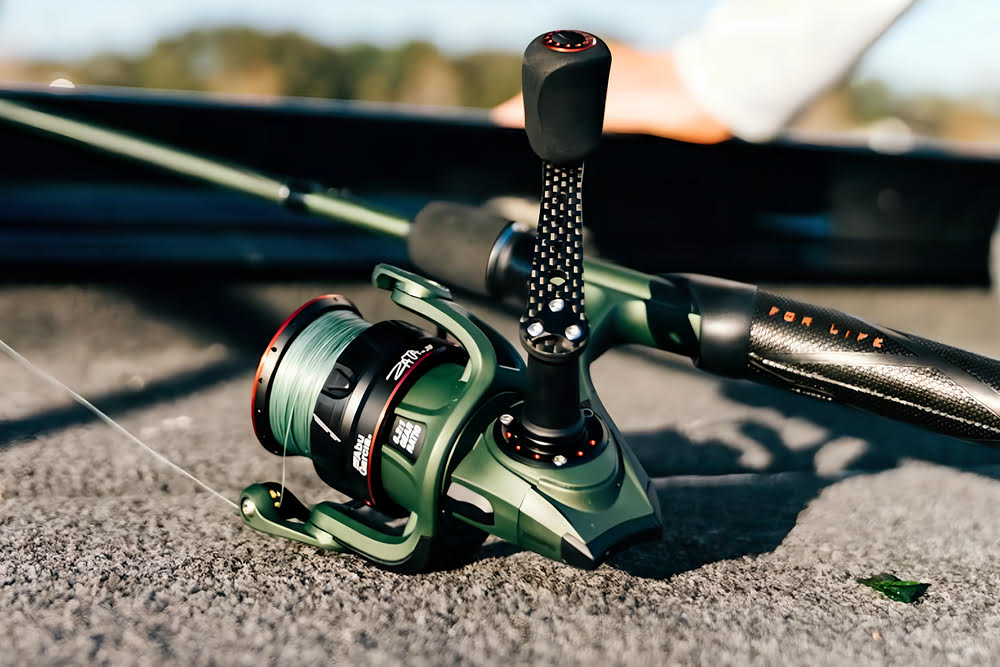
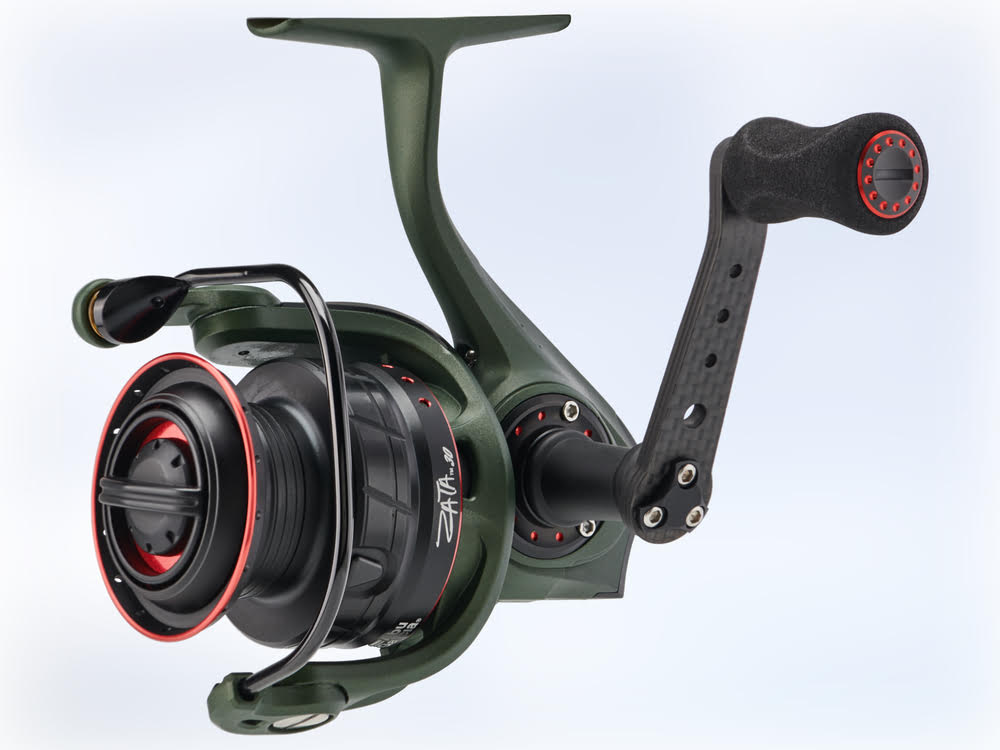
Abu Garcia Zata Spinning Fishing Reel
- Size: 20
- Gear Ratio: 6.2:1
- Mono Line Capacity (yards/lbs): 110/10, 130/8, 185/6
- Braid Line Capacity (yards/lbs): 190/8
- Max Drag: 14 lbs
- Weight: 8.1 ounces
The Zata spinning reel by Abu Garcia is the perfect reel for anglers looking for a lightweight, durable, and reliable reel for light tackle bass fishing.
The Zata features Abu Garcia’s proprietary Rocket Line Management System with integrated Everlast Bail and Rocket Spool lip design that is engineered to reduce friction, increase casting distance and prevent line tangles and wind knots. Providing you with improved casting performance and accuracy.
The Abu Garcia Zata is made of durable machined aluminum and corrosion-resistant stainless steel components that provide increased strength, durability, and corrosion resistance.
Equipped with 10 performance enhancing ball bearings and one roller bearing, the Zata is designed for frictionless fishing that provides you with a smooth wobble free experience and a more efficient power transfer from the handle to the spool. The Anti-Reverse switch that prevents the handle from spinning backward to help you set the hook faster.
The Zata is equipped with a Carbon-Fiber front drag system that delivers 14 lbs of max drag pressure. The drag provides smooth and consistent pressure with a bass hooked on the line.
The Zata’s 6.2:1 gear ratio offers anglers an efficient retrieve rate and improved line speed. The lightweight aluminum frame and EVA handle make the Zata comfortable to handle and reduces fatigue during long days on the water.
The Abu Garcia Zata Spinning Reel is built to handle the toughest conditions and bumps and dumps, while providing superior performance and durability. With its lightweight design, comfortable EVA handle, and features needed for a quality spinning reel, the Abu Garcia Zata is an excellent choice for anglers looking for a quality reel at a price that is easily in most angler’s budget.
Shop Online for the Abu Garcia Zata
Lew's HyperMag Spinning Reel
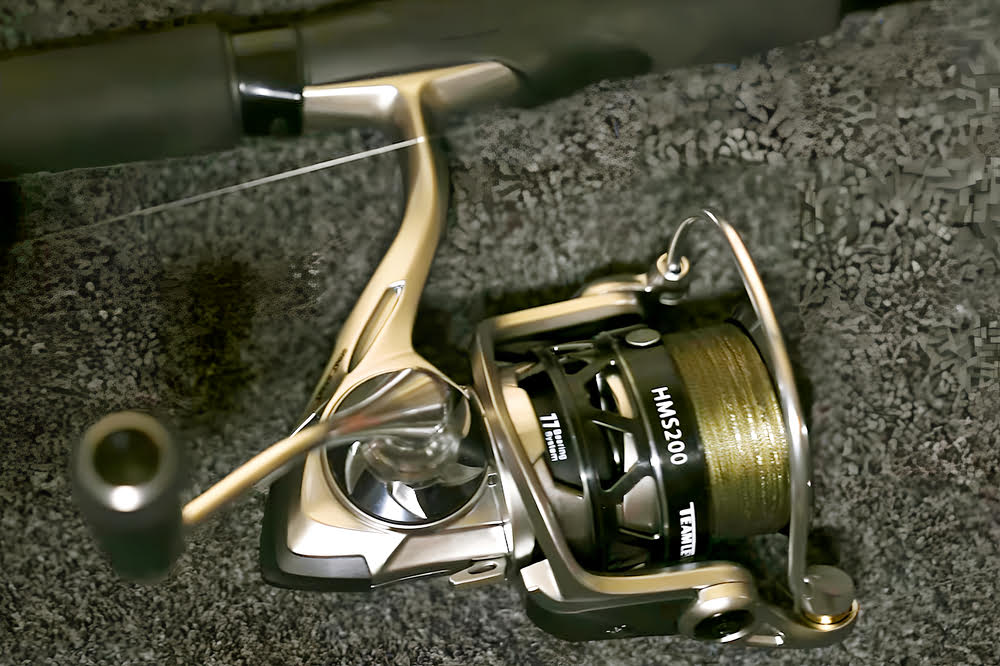
- Size: HMS200
- Gear Ratio: 6.2:1
- Mono Line Capacity (yards/lbs): 160/8
- Braid Line Capacity (yards/lbs): 160/20
- Max Drag: 20 lbs
- Weight: 7.2 ounces
The Lew’s HyperMag spinning reel is a powerful and reliable spinning reel that is perfect for experienced anglers looking for superior gear as well as beginners looking for dependable equipment.
The HyperMag features a 6.2:1 gear ratio and provides enough torque to move heavy lures or baits with ease. The drag system on the HyperMag is smooth and reliable, and allows you to fight big fish without worrying about line breakage.
The HyperMag is equipped with a magnesium frame, skeletal rotor, forged main gear, 11 stainless steel bearings, and a machined aluminum handle with a Winn Dri-Tac knob for better grip and control. The reel is also equipped with Lew’s exclusive Speed Lube technology, which minimizes friction between the parts of the reel and extends the life of the gears and bearings.
The reel is equipped with double anodized aluminum for superior performance and is more reliable and aesthetically pleasing than many other spinning reels. The HyperMag also features a magnesium skeletal rotor that reduces friction and ensures smooth operation, while the anti-reverse bearing ensures instant hookups for those bigger catches.
The Lew’s HyperMag is a great choice for anglers looking for a high-performance spinning reel that offers superior strength, lightweight design, and smooth operation. With its sleek design, powerful drag system, and robust construction, the HyperMag is a great reel that can be trusted to handle all types of fishing conditions.
Shop Online for the Lew's HyperMag
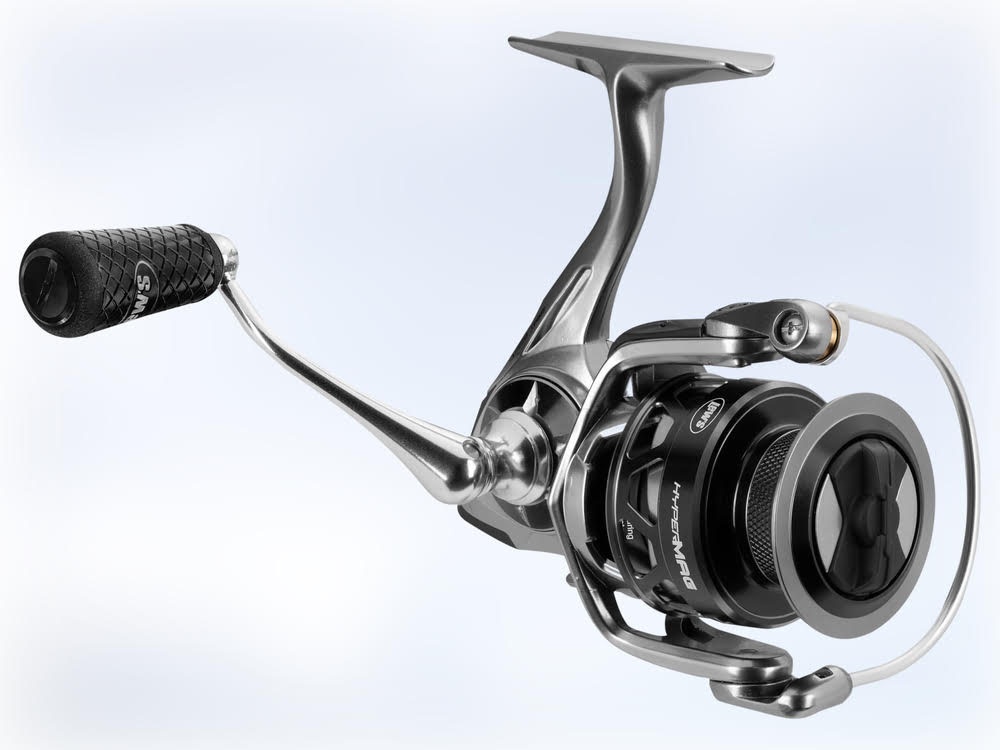
Penn Battle Spinning Reel
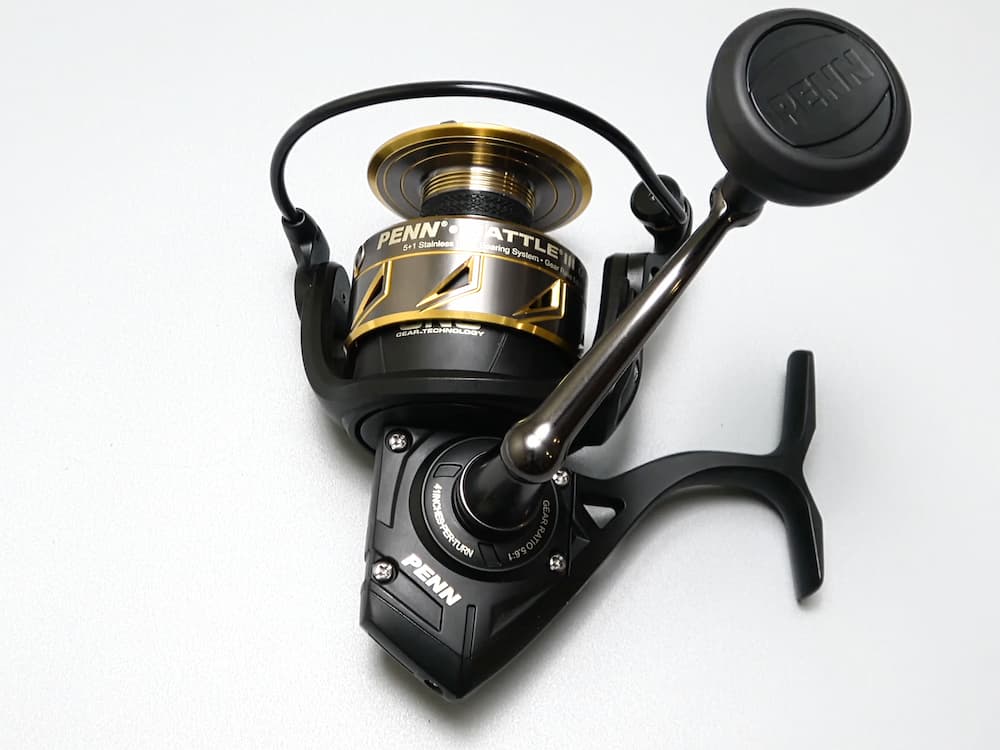
- Size: 2000
- Gear Ratio: 6.2:1
- Mono Line Capacity (yards/lbs): 240/4; 180/6; 125/8
- Braid Line Capacity (yards/lbs): 210/8; 180/10; 165/15
- Max Drag: 10 lbs
- Weight: 9.8 ounces
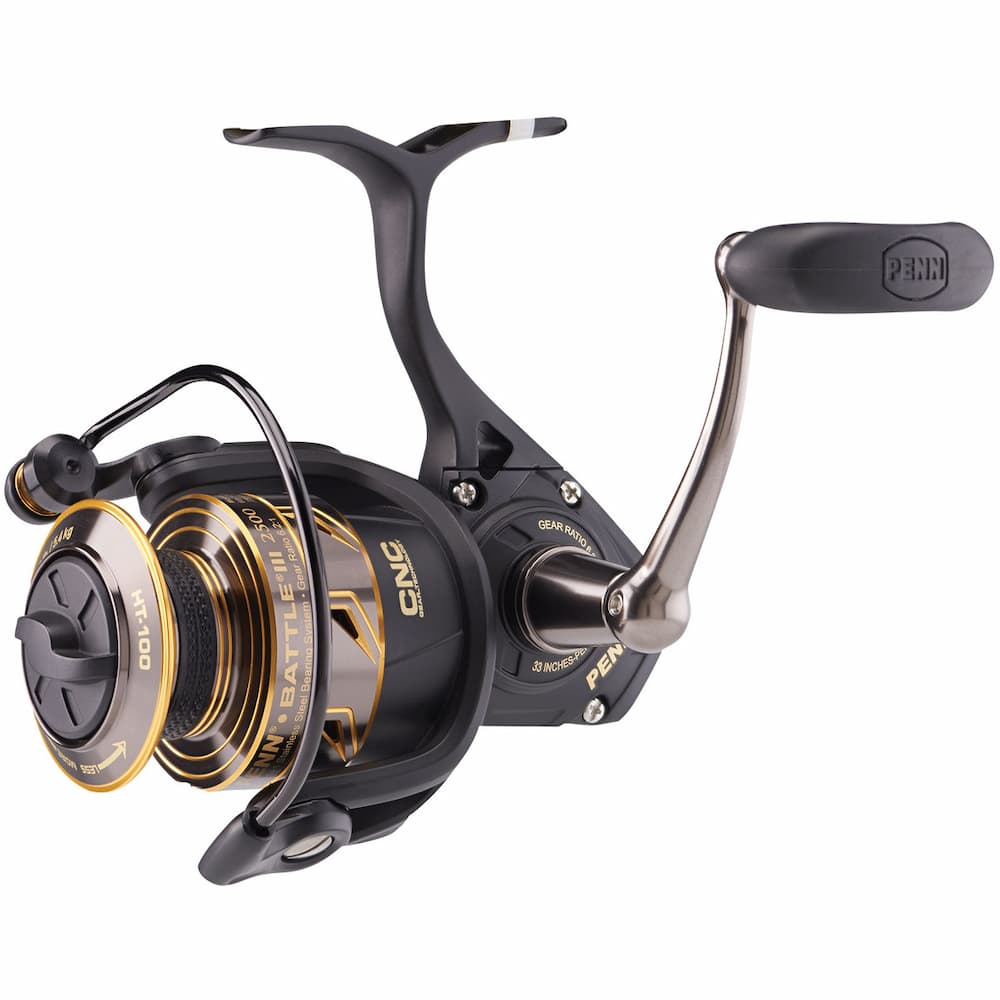
The Battle is one of Penn’s best selling spinning reels. It is one of the most popular mid-range bass spinning reels on the market offering a wide range of sizes.
The Battle’s design is based on the original Penn Battle, but they’ve made some improvements.
If you’re a beginner in bass fishing, this is a great reel for you as you’ll get some great features and performance without a massive investment.
It has a very smooth HT-100 Versa-Drag washer system to give you a solid drag pressure. The Versa-Drag washers are keyed into the spool, which is different from ordinary reels. The drag is smoother and more consistent with less start-up inertia.
The reel features Penn’s Superline Spool equipped with a rubber lining providing braid-ready support without the need for a different line backing.
The Battle comes equipped with 5 stainless steel ball bearings, and an instant anti-reverse bearing, which have been sealed to protect them from water and debris. The instant anti-reverse bearing is a great feature to have when fighting a big fish.
The smaller models are agile enough to handle all of your bass fishing needs, with the larger versions strong enough to handle saltwater fishing.
The Battle is an excellent reel if you are looking for an all-around performer.
Shop Online for the Penn Battle III
Reader Review:
“I purchased this reel to replace a Pflueger President spinning reel that had seen better days.
I was looking for a reel that would be a good all around reel for both saltwater and freshwater fishing. This reel has been great so far for me. I’ve fished with it on multiple bass fishing trips.
I’ve been using it with a 7’6″ medium action rod and this spinning combo works great together.
The reel is heavier than the Pflueger was, but it doesn’t feel too heavy and is well balanced. I also like that it has a higher gear ratio than other reels I was researching.
The drag system is also great, I’ve been able to reel in some big bass fish without any problems. I’m really happy with this reel and would recommend it to others.”
Pflueger Supreme Spinning Reel
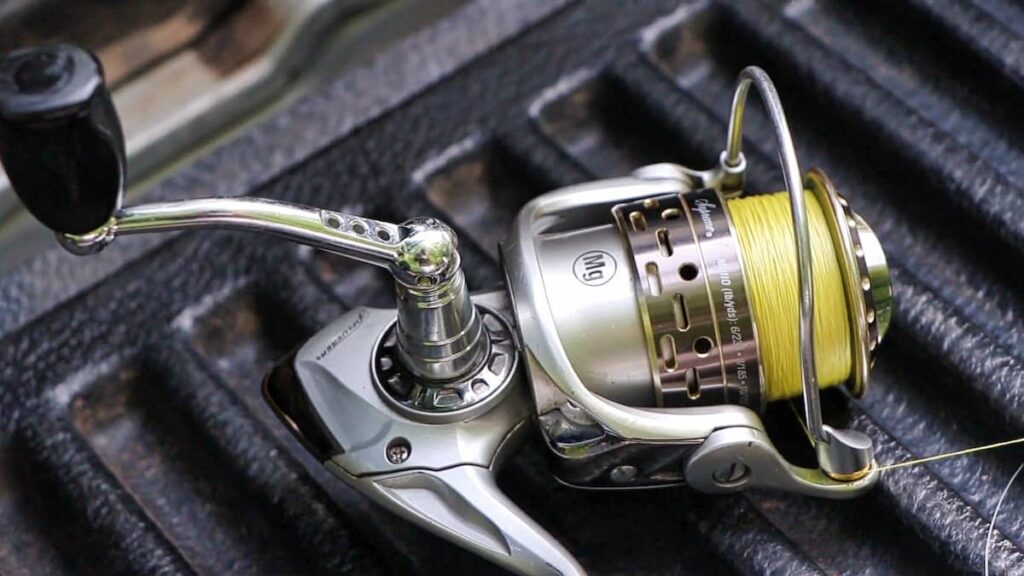
Size: 30X
Gear Ratio: 6.2:1
Mono Line Capacity (yards/lbs): 255/4, 145/6, 130/8
Braid Line Capacity (yards/lbs): 275/6, 190/8, 160/10
Max Drag: 10 lbs
Weight: 7.5 ounces
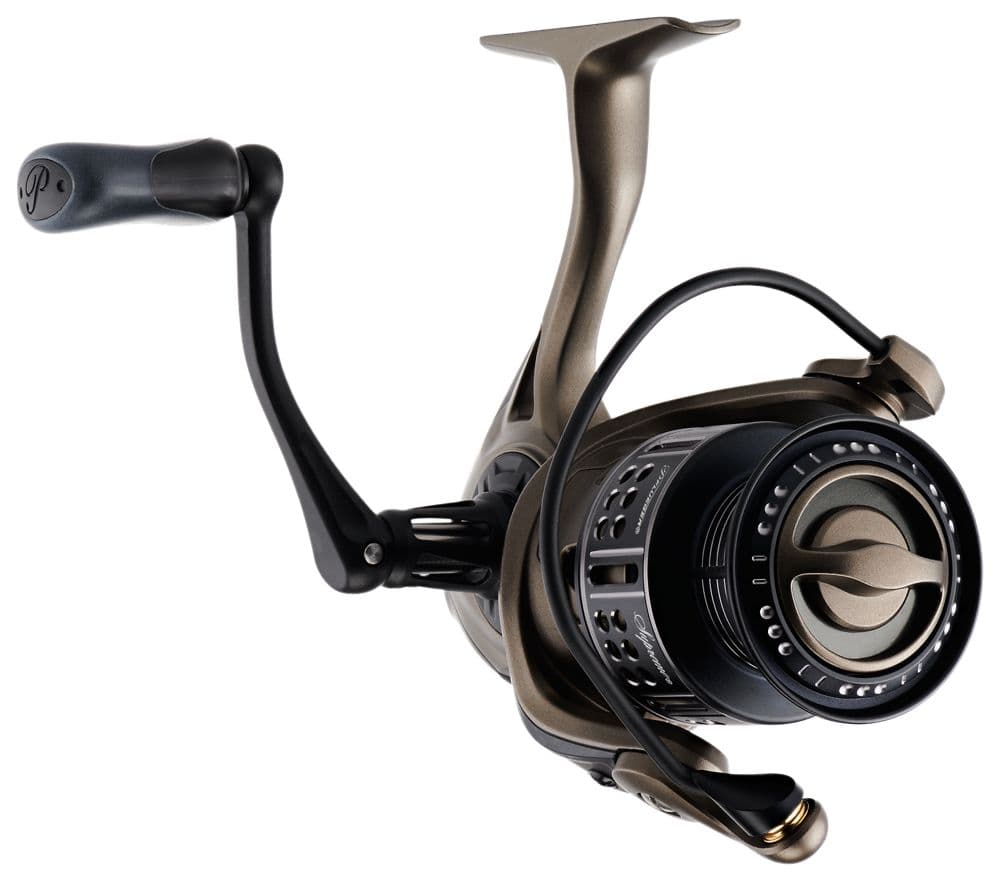
Pflueger Supreme spinning reels are noted for their ultra-low weight. The Supreme series reels are the lightest in the Supreme line, models starting at 6.6 ounces.
With a machined aluminum spool and a magnesium body, rotor, and side plates, it’s easy to see where all the weight savings went. Magnesium, a lightweight metal that is much lighter than aluminum but just as strong.
The quality doesn’t stop at the materials though, the machining of the reel is very precise and the welds are very clean.
The reel has an instant anti-reverse bearing. This means that you don’t have to push a button to release the tension on your line. All you have to do is reel in, and it will release it for you. It’s a much more convenient system.
The braid-ready aluminum spool is machined and ported to provide enough space in the spool for braid to lay properly. The spool has an anodized coating, which helps to prevent corrosion. It looks great too.
The Supreme also has a line roller made of titanium, which helps reduce the chance of line twist and makes your line lay out smoothly when reeling and casting.
The low profile bail wire has a sure-click system. This makes the bail open and close with a distinct “click”. This means that you’ll know when your bail is fully open, which is very important for avoiding backlashes.
When you start to reel, the resistance feels very smooth. This is thanks to the eight shielded stainless steel ball bearings and the instant anti-reverse bearing.
There is a soft EVA knob on the handle. This provides a comfortable yet durable grip. The handle has a lot of great ergonomic features. It features a large foregrip, which makes it easy to grip when you’re fighting a strong trophy fish.
Finally, Pflueger designed this reel to be a real workhorse. They made it up to the task of handling just about any kind of fishing condition. The carbon-inlay drag sets it apart from other reels, and it performs beautifully.
With the Supreme’s heavy-duty construction and powerful drag system, you can be certain that you’ll be ready for any type of bass fishing you’re wanting to do.
Shop Online for the Pflueger Supreme
Reader Review:
“I have used the Supreme spinning reel for a few years now and could not be more satisfied. I have had some friends who have had problems with theirs, but I have had zero problems with the reel and it has served me very well.
I use the Supreme for any type of fishing. I have caught many different fish from bass, to walleye, to catfish, to salmon.
This is a great reel for the price and I would buy it again in a heartbeat.”
Daiwa Ballistic LT MQ Spinning Reel
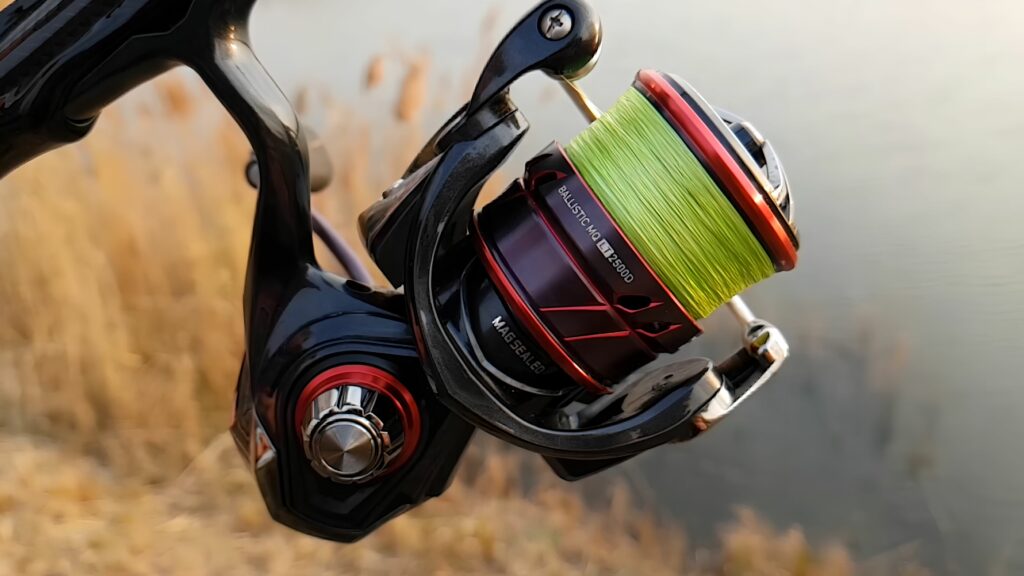
Size: 2500D-XH
Gear Ratio: 6.2:1
Mono Line Capacity (yards/lbs): 240/8, 210/10
Braid Line Capacity (yards/lbs): 250/10, 185/15
Max Drag: 22 lbs
Weight: 6.9 ounces
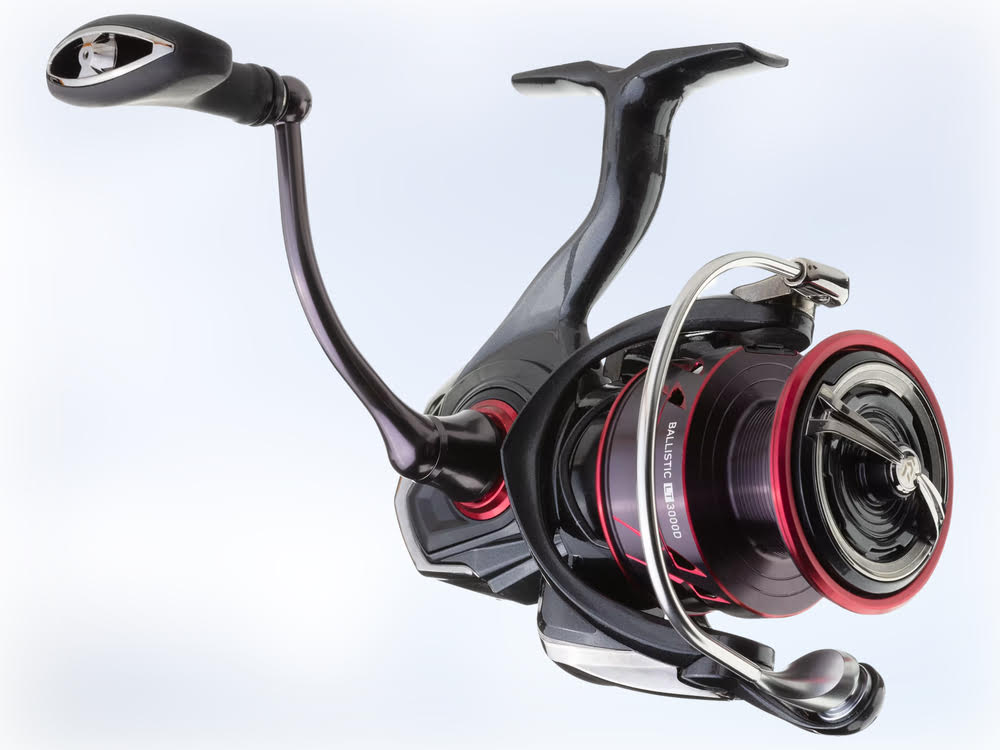
The Daiwa Ballistic MQ LT spinning reel is a great choice for anglers who need a lightweight, powerful, and durable reel. With its Magsealed mainshaft system, ergonomic aluminum handle, and gently sway, this reel is designed to provide an amazing fishing experience.
The Ballistic MQ LT is lightweight and powerful, providing anglers with a smooth and powerful retrieve. The reel comes with an advanced ATD drag system that provides a seamless hook up, allowing anglers to fight large fish without worrying about line breakage.
The Ballistic MQ LT features a Monocoque Body design that is constructed from Zaion-V carbon, a highly durable and corrosion resistant material. The reel also features an ergonomic aluminum handle and BraidReady design that allows anglers to use any type of line to suit their needs.
The reel is equipped with Air Rotor design that reduces weight by 15%, increases torque, and provides enhanced reel sensitivity. The Digigear System, which uses Digigear aircraft-grade aluminum gearing, provides superior winding performance with each revolution and helps prolong gear life.
Designed for all types of fishing environments, including freshwater and saltwater fishing trips. It is perfect for crankbaits, swimbaits, and other lures, and its Magsealed mainshaft system ensures long-lasting performance without worrying about salt or other contaminants entering the gears.
The Daiwa Ballistic MQ LT spinning reel offers anglers unrivalled strength and comfort, with its lightweight construction, superior ATD drag system, and sleek, modern design. While its premium price tag may be intimidating, you won’t be disappointed with the performance of this reel.
Shop Online for the Ballistic MQ LT
Okuma ITX Spinning Reel
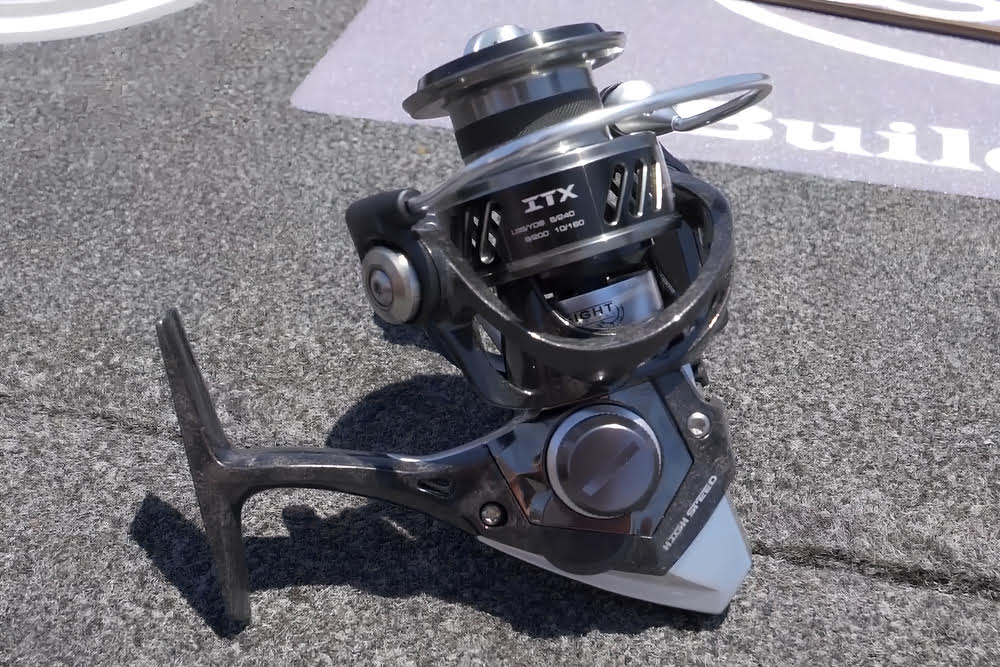
Size: 2500H
Gear Ratio: 6.0:1
Mono Line Capacity (yards/lbs): 195/6, 165/8, 130/10
Max Drag: 18 lbs
Weight: 8.3 ounces
The Okuma ITX Carbon Spinning Reel is an affordable and reliable spinning reel that is built to last. Its side plates, body, and rotor are constructed out of C-40X carbon for superior strength and rigidity, while remaining lightweight. This material helps maintain a low profile design, which allows for easy maneuverability when trying to reach hard to access areas or fighting larger fish.
The Okuma ITX Spinning Reel is equipped with six stainless steel ball bearings and an anti-reverse bearing, which help to reduce friction and extend its lifespan. Grease coated bearings provide several benefits to anglers who use this spinning reel, including smoother and more consistent operation, reduced wear on internal components, and easier maintenance.
The Okuma ITX Reel is equipped with a pinion gear, which helps create smooth and reliable performance when casting and retrieving your line. A brass pinion gear is precision-cut offering superior strength and durability.
The Okuma ITX Reel also features a multi-disc, carbon fiber drag system that creates smooth performance with precise control while fishing. Okuma’s TGT Grip Technology provides superior control over casts and retrieves while reducing line tangles and strain on anglers’ hands.
The Okuma ITX Carbon Spinning Reel is an affordable and reliable spinning reel that is built to last. It offers smooth and seamless performance with its carbon fiber drag system, automatic anti-reverse bearing for rapid adjustability, brilliantly precise brass pinion gear, and durable screw-in handle. For anglers looking for a reliable spinning reel that can handle the rigors of any fishing situation, the Okuma ITX Carbon Spinning Reel is an excellent choice.
Shop Online for the Okuma ITX
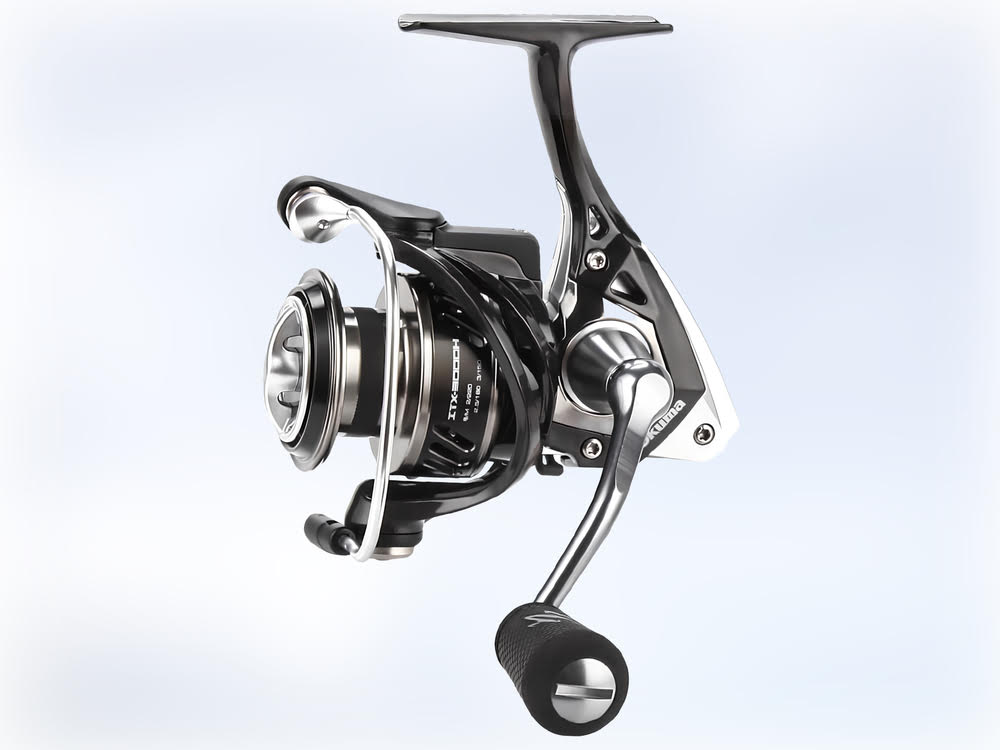
Lew's Custom Pro Spinning Reel
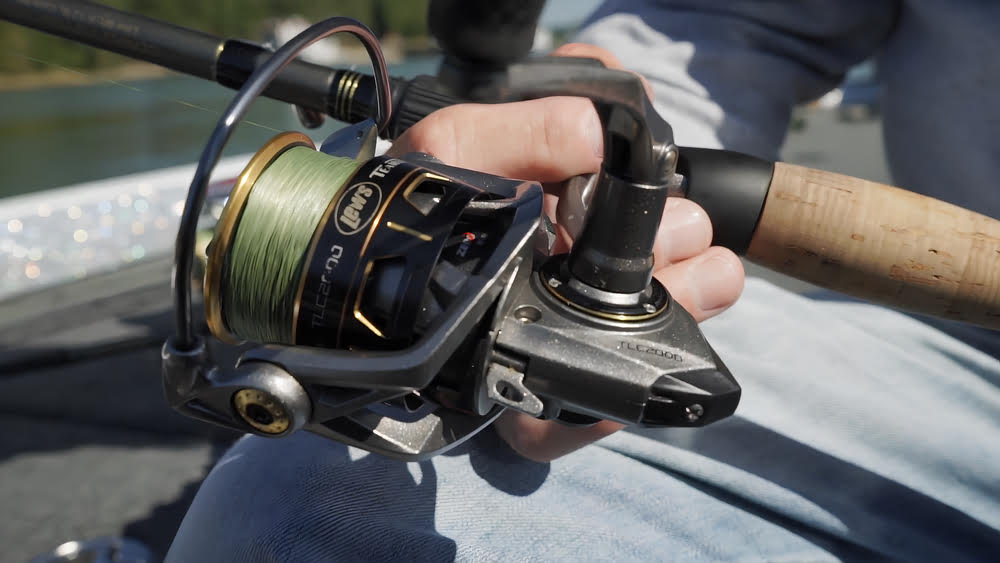
Size: TLC2000
Gear Ratio: 6.0:1
Mono Line Capacity (yards/lbs): 195/6, 165/8, 130/10
Max Drag: 18 lbs
Weight: 8.3 ounces
The Lews Custom Pro Spinning Reel is a great choice for bass anglers who are looking for a reliable, high-performance reel. The all-aluminum body and Skeletal Speed Rotor C60 carbon make this reel lightweight yet strong and durable.
The Custom Pro is equipped with an 11+1 ball bearing system, a robust stainless steel mainshaft, and a Skeletal Speed Rotor for improved casting accuracy. It also has a zero reverse one-way clutch bearing that prevents the handle from spinning backwards when you are reeling in a fish.
The double-anodized aluminum spools provide enhanced gripping power while braiding line onto its reels, and the flush-and-drain ports make it easy to wash down and maintain the reel. The aluminum bail wire adds structural integrity and the stainless steel exterior screws provide increased strength and durability.
I was really pleased with my experience using the Lew’s Custom Pro. It was easy to use and provided top-notch performance. The reel is lightweight and comfortable to use, with a smooth and consistent cast. It has a maximum drag of 15 lbs and a 6.2:1 gear ratio. It also has a retrieve rate of 33 inches per turn.
Overall, the Lew’s Custom Pro is an affordable spinning reel that is perfect for bass anglers. It’s lightweight yet durable, with quality materials that won’t rust or corrode over time. It also provides smooth and reliable operation, and its one-way clutch bearing helps reduce wear and tear on the reel. I highly recommend this reel for anyone looking for a great spinning reel.
Shop Online for the Custom Pro Speed Spin
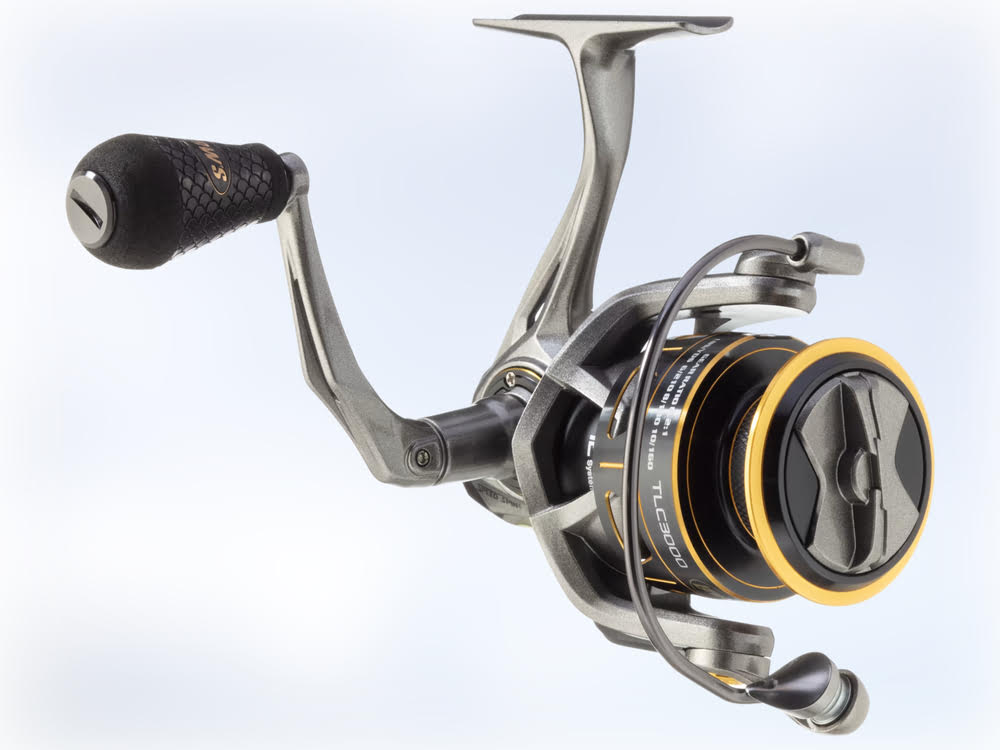
Previously Recommended Spinning Reels
SHIMANO Stradic FL Spinning Fishing Reel
Why It Was Removed:
Removing the Stradic FL had little to do with the Stradic FL. This is still an amazing spinning reel and worth checking out, but at 4 years old, there are some newer Shimano spinning reels we feel are slightly better and at a better price range.
Original Review:
The Shimano Stradic FL is a powerful bass fishing reel that just keeps on going. It is Shimano’s newer model and a step up in features, performance, and design from the Shimano Stradic FK Spinning Reel.
Its Hagane body is twice as strong as the previous Stradic model, thanks to advances in material and process technology. The new Hagane body is made using Shimano’s cold forging process, an advanced casting technology that creates a denser, stronger, and more rigid metal delivering a stronger body build than what was previously possible.
With all this power you would assume that the reel would be incredibly heavy, but the weight for the 2500 is only 7.9 ounces.
The Stradic FL features Shimano’s SilentDrive and Dyna-Balance technologies delivering excellent noise and vibration reduction during both the cast and retrieval process. Making this an incredibly smooth reel to use.
The 6.1 shielded ball bearing system, Super Stopper II Anti-Reverse, along with the wide range of settings in the Cross Carbon drag system make this the perfect reel for pulling in the biggest bass while still maintaining a smooth and stable retrieval.
If you’re okay with spending a little more on your bass spinning reel, you can’t go wrong with the Shimano Stradic FL Spinning Reel.
Reader Review:
“This reel is awesome! I bought the Stradic FL for fishing bass and love it. I have mine paired with a 6’5″ spinning rod and it is perfect. I can cast a 1/4 oz jig 20+ yards effortlessly.
I like the size because it fits well in my hands. I bought the 2500 sized reel 6 months ago and have since caught loads of largemouth bass with it.
It cost a lot more money than I had previously spent on a reel, but it has been worth it. The drag system is great and makes it easy fighting even large bass. The reel is really lightweight and easy to use.
I would recommend this reel to anyone willing to spend a little more on their fishing gear.”
The recommended size for bass fishing:
Size: 2500
Gear Ratio: 6.0:1
Mono Line Capacity (yards/lbs): 120/10, 140/8, 200/6
Braid Line Capacity (yards/lbs): 100/30, 145/15, 150/10
Max Drag: 20 lbs
Weight: 7.9 ounces
Read our full Stradic FL review here.
Original Vendor Links:
Daiwa BG Spinning Reel
Why It Was Removed:
The Daiwa BG is a solid reel that works great whether your throwing out off the coast, inshore, or the backyard lake, however, it’s a bit heavy. With the recommended 2500 size weighing in at 9.3 ounces, it can be a bit taxing to fish an entire day with. So we’re retiring this from our main recommendation list.
Original Review:
It’s hard to believe the price on the Daiwa BG spinning reel, especially when you’re familiar with the quality and the reputation of the Daiwa brand. This is one of the many reasons the BG is such a popular reel among bass anglers.
The BG is built on a Daiwa’s Hardbodyz frame, which is a combination of lightweight ABS and Zytel polymers. The result is a very strong and solid reel. The reel is slightly heavier and larger than some of the other reels on this list, however, the durability and functionality of the reel more than makeup for this.
The BG has a 7-bearing Digigear (6+1) ball-bearing system. The Digigear system is typically only found in much higher-end reel models.
The BG has a very smooth retrieve. You may notice some oscillation during your first couple of reels, which is normal. But after just a bit of use, the oscillation will go away.
The reel has a braid-ready dynamic cut spool plus outstanding anti-reverse capabilities.
The BG also includes Daiwa’s unique Carbon ATD drag system. Carbon ATD uses carbon washers in the drag system, which is supposed to give you more consistency in the drag system. The drag system works great when you’re fighting a larger bass.
The price is amazing for everything you get with this reel, and most bass fishermen agree the Daiwa BG is a durable powerhouse among spinning fishing reels.
The BG is a freshwater or saltwater spinning reel. With larger models designed to handle saltwater fish.
Reader Review:
“I have several of the Daiwa BG reels, and they all work fantastic.
I’m an avid bass angler and use them on all of my rods. I have had high-end reels from other companies, but I always come back to the Daiwa BG.
They just work, and they work well. I have never had a problem with the drag, and the anti-reverse is excellent.”
The recommended reel size:
Size: 2500
Gear Ratio: 5.6:1
Mono Line Capacity (yards/lbs): 140/10, 170/8, 210/6
Braid Line Capacity (yards/lbs): 120/30, 170/20, 190/15
Max Drag: 13.2 lbs
Weight: 9.3 ounces
Read our full Daiwa BG review here.
Original Vendor Links:
Piscifun Alloy X Spinning Reel
Why It Was Removed:
For some reason, it appears that Piscifun discontinued this reel. It has been out of stock on their website for a number of months, though it could still be purchased on Amazon.
Then without warning or message it was completely removed from their website and Amazon.
Original Review:
If you’re looking for one of the newest and best-performing spinning reels on the market, you’ll want to check out the Piscifun Alloy X Spinning Reel.
One of Piscifun’s recent additions, the Alloy X has been a surprising breath of fresh air.
The body of the Alloy X is designed using a single piece of aluminum alloy that is precisely shaped through a computer numerical control machine. This design method provides additional room within the body of the reel for larger more robust gear components. This improved engineering is one of the facets that enable this reel to really excel.
Even with this enhanced body design, Piscifun didn’t sacrifice the reel’s light weight. with the precision of the CNC machining, they were able to remove unnecessary parts that would have otherwise weighed the reel down.
Due to this, they were able to keep the Alloy X weighing in at 8.4 ounces. While not the lightest reel on this list, it’s also not the heaviest and the overall power of the reel definitely makes up for it.
The Alloy X is equipped with a much stronger carbon fiber drag system than any other of our recommended reels. Clocking in at a whopping 26-pound max drag.
The drag system is easy to use, simple to adjust, and performs exceptionally well.
Casting and retrieving on the Alloy X is smooth and free of any problems. The shielded 12 bearings system (11 bearings + anti-reverse bearing) allows incredibly smooth casts and retrieves.
We didn’t have any problem getting some major distance on our lures or when bringing them back in. The retrieve is smooth and consistent even with bigger fish on the line.
A nice little feature of the Alloy X was the decision to cast the bail in a one-piece design. We didn’t notice this making much of a difference, however, we are fans of reducing parts down as much as possible. Fewer things to potentially break.
During our tests, we tried our best to find the breaking point for this reel, but we couldn’t. It held up well even to some massive bass bedded in the roots. It took some diligent work, but they didn’t even stand a chance.
While we primarily fish for freshwater bass species, the Alloy X is saltwater rated and has inshore fishing models for the saltwater angler.
To say we’ve been pleasantly surprised by the Alloy X is an understatement. We’re incredibly happy with this reel and believe you will be too.
While the name Piscifun doesn’t carry the weight of Shimano or Penn, the quality and performance of the Alloy X proves that the bigger brands shouldn’t underestimate Piscifun.
Recommended size:
Size: 2000
Gear Ratio: 5.5:1
Mono Line Capacity (yards/lbs): 125/8, 180/6, 240/4
Braid Line Capacity (yards/lbs): 100/15, 180/10, 210/8
Max Drag: 26 lbs
Weight: 8.4 ounces
For a more detailed look at the Alloy X, see our full review here.
Original Vendor Links:
Daiwa SS Tournament Spinning Reel
Why It Was Removed:
We really only have good things to say about the SS Tournament. It can be hard to say goodbye to a classic, but it’s become increasingly difficult to find good sources to purchase the SS Tournament from, so it’s time to set our sights onto new spinning reels.
Original Review:
The Daiwa Tournament SS Spinning Reel is an iconic bass fishing reel. It has been around for what seems like forever and has gone mostly unchanged in the last 30 years. Though, they have added some upgrades in the last few years.
It was once one of the most popular spinning reels, though in recent years its popularity has dwindled as more modern reels have hit the market.
The Tournament SS is a powerful spinning reel with a legendary drag system. The Tournament SS has a very smooth retrieval which makes the reel a pleasure to use for a long day on the water.
The Tournament SS is a long-casting spinning reel and you can get some great distance on your casts. This makes the reel ideal for offshore fishing.
The Tournament SS is very durable. The body has a nice solid feel that you don’t get in many of the more modern reel designs.
The spool on this ultralight spinning reel is built with aerospace-grade aluminum that helps lighten the reel a bit while still maintaining strength.
It’s equipped with a 3 stainless steel bearing system, that despite the lower number than other modern reels, delivers a surprisingly fluid experience.
The Tournament SS is primarily a freshwater reel, but it can handle light saltwater exposure.
It features an extra-large bail wire that closes every time after a cast without fail. As well as an infinite anti-reverse system.
Overall, the Daiwa SS Tournament Spinning Reel is a reliable classic that fits the saying, “They don’t make them like they used to.”
If you’re not interested in all of the bells and whistles of the newer reels and just want something that’s going to last you for years to come then this is the reel for you.
Reader Review:
“I have used these Daiwa Tournament SS reels for years, and I still love them. I have two of them, one for my primary and a backup.
I have had some reels that I have had to replace in a year, but my oldest Tournament SS reel is about 15 years old and it still works well.
They don’t have all of the bells and whistles of some of the newer reels, but it is no big deal. They are very well made and durable. I have abused them and they still work great.
I would recommend this reel to anyone who wants a reel that will last a long time.”
The recommended bass reel:
Size: SS700
Gear: 4.9:1
Mono Line Capacity (yards/lbs): 145/4, 110/6, 75/8
Max Drag: 8.8 lbs
Weight: 7 ounces
Original Vendor Links:
Lew's Mach Crush Speed Spin Spinning Reel
Why It Was Removed:
While there’s nothing wrong with the Mach Crush spinning reel, Lew’s has since released some other spinning reels that are quite a bit better. So we’ve added those into the main recommended area and retired this model.
Original Review:
The Lew’s Mach Crush spinning reel is a high-quality reel with a lightweight skeletal rotor made out of c40 carbon and a 6-disc carbon built drag system which is strong enough to endure the rigors of catching large bass.
The Mach Crush is a lightweight spinning reel, but the body and rotor are built with a high strength to weight ratio, which is great for when you’re casting a lot of line.
The Mach Crush has 11-bearings built into the reel, which is more bearings than most other reels.
The reel has a directional clutch bearing in the Zero-Reverse system, which helps the reel continue spinning smoothly when you are fighting a fish. You don’t have to worry about the reel freezing up on you when reeling in a larger bass.
The Mach Crush has an S curve oscillation system, which allows the spool to spin smoothly for a perfect payout for every cast.
The machined aluminum spool allows for smooth spooling of the line. The spool has a chamfered knurled edge, which provides a great non-slip feel in your hand.
The machined aluminum reel handle is lightweight but comfortable. The side plates are made out of aluminum and have a nice machined finish.
The spool is also removable on this reel, which allows for easy cleaning.
If you want a lightweight bass fishing reel, then the Mach Crush is a great option.
Reader Review:
“I was looking for a good spinning reel for use while bass fishing. I wanted a reel that could handle 10-12 lb test line. I did a lot of research and the Mach Crush Speed Spin reel met all my requirements.
It’s a very smooth reel with a great drag system. I have caught bass up to 7 pounds with it and it’s performed great. It casts very well and is very smooth. I love the oversized crank handle which allows me to crank up fish a lot faster than other reels.
I have used this reel on bass and crappie and it has performed flawlessly. I am very pleased with this reel.”
The recommended spinning gear size:
Size: MCR200A
Gear Ratio: 6.2:1
Mono Line Capacity (yards/lbs): 120/8
Braid Line Capacity (yards/lbs): 120/30
Max Drag: 14 lbs
Weight: 8.4 ounces
Original Vendor Links:
Penn Pursuit III Spinning Fishing Reel
Why It Was Removed:
The Pursuit is still a good choice for a low budget reel, but we don’t feel it’s quite up to the standard of “best spinning reel”.
Original Review:
Penn’s Pursuit III is one of the most affordable bass fishing reels on the market, and you would never guess it from the quality of these reels.
The reel was designed to bring quality and functionality to the entry-level category without a lot of complicated features.
Penn has been known for years as a leading bass fishing reel manufacturer and has developed a reputation for quality and dependability.
At an entry-level price, you might expect a lower quality reel. The reality is that the Pursuit III is a powerful and durable reel to help you catch some of the most impressive bass. This is why it is a favorite among beginner bass fishing enthusiasts.
The Pursuit III has a corrosion-resistant graphite body and an ergonomic handle for easy handling.
This Penn reel includes 4 shielded stainless-steel ball bearings that ensure a smooth operation and an Instant Anti-Reverse bearing to eliminate back play.
The reel also has a removable anodized aluminum spool making it a bit easier to clean and maintain.
It is equipped with line capacity rings that let you know how much line you have out and how much line is left on the spool.
The reel has a very dependable HT-100 carbon fiber drag system that is designed to battle the abuse from large bass.
This Penn spinning reel is perfect for the beginner because it’s easy to use and affordable. If you’re looking for a beginner level spinning reel, this is it.
Reader Review:
“I was on the fence about this reel for awhile because I’m not a big Penn fan. But I ended up buying a Pursuit III 2500 spinning reel last year and it has been great.
I’ve caught many bass with it – up to 9 lbs. It is smooth, sturdy, and does not feel like it will break.
It is still in great condition after a full year of use and I’m looking forward to using it for many more years to come.”
The recommended size for a bass fisherman:
Size: 2500
Gear Ratio: 6.2:1
Mono Line Capacity (yards/lbs): 255/6, 175/8, 140/10
Braid Line Capacity (yards/lbs): 240/10, 220/15, 160/20
Max Drag: 10 lbs
Weight: 9.8 ounces
Find out more about the Penn Pursuit. Read our full review here.
Original Vendor Links:
SHIMANO Sienna Spinning Fishing Reel
Why It Was Removed:
The Sienna is an economy priced and designed spinning reel that offers decent entry level fishing, but not much else. While we don’t think anything’s wrong with this reel, we can’t justify its inclusion in this particular list.
Original Review:
When designing the Sienna Spinning Reel, Shimano made a reel specifically for the hobbyist bass fisherman.
The best feature of this reel is its price. However, that doesn’t mean you are getting a subpar reel for the price. Sienna is a well-balanced and well-built reel that just happens to be affordable.
It’s very versatile and should meet the needs of most hobbyist anglers.
Compared to similarly priced reels, this Shimano spinning reel is an absolute steal. It’s well balanced and has a solid drag system.
The Sienna incorporates Shimano’s Propulsion Line Management System. This system is designed to make it easier to cast and helps to prevent the line from twisting while coming off. It is great for longer casts and reducing line twist, especially in windy conditions. It also helps with accuracy. The line management system is not the strongest in the industry, but it’s still better than not having it.
The Sienna is equipped with 3+1 bearings featuring the Super Stopper II system, Shimano’s push of the button anti-reverse system.
The rotor has little to no back play or wobble and it feels fairly smooth when casting and reeling.
It’s not the best spinning reel on this list but is an excellent choice for any bass angler who wants a good quality spinning reel on a budget.
Reader Review:
“I can’t say enough good things about this reel. I mainly use it for bass fishing in my backyard lake but have also used it for trout fishing. I had a big fish hooked last week and it didn’t even phase it.
The reel is affordable and the drag set is perfect for the kind of fishing I do. I also purchased one for my son who is new to fishing.
The drag and clicker sound are really strong, they’re not as quiet as I would like but they are a bit of a trade-off for the great price. I recommend this to those looking for something attractive and durable yet won’t break the bank!”
The recommended size for bass freshwater fishing:
Size: SN2000FGC
Gear Ratio: 5.0:1
Mono Line Capacity (yards/lbs): 165/6, 105/8, 95/10
Braid Line Capacity (yards/lbs): 140/10, 115/15, 95/20
Max Drag: 9 lbs
Weight: 8.8 ounces
Check out our full Shimano Sienna review by clicking here.
Original Vendor Links:
Okuma Ceymar Spinning Reel
Why It Was Removed:
When it comes to budget reels, the Okuma Ceymar is one of the better options available. We will be creating some more focused lists and will be moving this reel to the budget focused spinning reel list.
Original Review:
The Okuma Ceymar Spinning Reel is another solid performer on a budget.
The Ceymar has a smooth and precise feel.
The reel is designed with a fluid 8-bearing (7 BB + 1RB) drive system to ensure smooth and even casting.
It offers an abundant line-up of performance features, including the advanced Okuma precision elliptical gearing, which allows increased cast distance and accuracy.
The oiled felt, multi-disc drag system is dependable and can be adjusted to your liking.
The forged zinc handle arm has a good grip and the custom EVA handle knobs are very comfortable.
The enlarged line roller and firm aluminum bail wire are sure to deliver confidence under all conditions.
The Ceymar’s machined aluminum spool is much stronger than the plastic ones used in other models in this price range.
A computer-balanced rotor system by Okuma allows the rotor not to wobble even at high speeds.
A well-made spinning reel, the Okuma Ceymar is a great choice for anyone looking for a budget-friendly, quality bass reel.
Reader Review:
“So I’ve been fishing for about 5 years and have never been able to find a reel that is smooth and light like I want. I always go with Shimano but I wanted to try a new brand. The Ceymar was my first Okuma.
I researched it and it seemed like a great reel for the price. When I got it, I had mixed feelings. It was smaller than what I was expecting but it turns out that it is perfect for a small diameter line like I was looking for.
I’ve been using it for a while now and it works great!”
The recommended size spinning reel for bass:
Size: C-30
Gear Ratio: 5.0:1
Mono Line Capacity (yards/lbs): 185/6, 145/8
Max Drag: 13 lbs
Weight: 8.2 ounces
Click here to check out our full review of the Okuma Ceymar.
Original Vendor Links:
What to look for in the best bass spinning reel
If you’re new to bass fishing, it’s important to know what to look for when selecting a spinning reel. In the following section, we cover the most important items to consider before making your purchase.
Quality Craftsmanship
The best spinning reels have been built with precision, using high-quality materials and components. You will be out in the elements, fishing in various conditions. You’ll want a durable reel that will provide you with years of dependable use.
Most spinning reels will be constructed out of aluminum alloy or graphite composite. Both of these materials have their advantages and disadvantages.
Aluminum alloy is lightweight, long-lasting, and corrosion-resistant. It is the material that most manufacturers use.
Graphite composite is generally lighter and cheaper than aluminum, but is very strong. It is not as corrosion resistant as aluminum, but it is more resistant to impact.
Either material makes a great spinning reel, just be mindful of the material and take any necessary protective measures to preserve the longevity of the reel.
A big example of this will be the type of water you’re going to be fishing in. If you’re going to be fishing in saltwater, make sure you get a saltwater reel. If you’re only going to be fishing in fresh, then a freshwater spinning reel will be just fine.
Weight of the Reel
It’s important to keep in mind the weight of your spinning reel.
While a few ounces may not seem like much. When you’re actively casting and reeling in your line the repetitive motion can make your “light” reel feel quite heavy.
If your budget will allow, it’s better to get reels for specific fishing purposes rather than a single larger “general purpose” reel for all occasions.
This will allow you to size your reels appropriately to the type of fishing you’re wanting to do with them.
Spinning Reel Size
When considering the size of the reel there are a few things to keep in mind.
First, make sure you’re getting the right size reel for the type of fishing you’re wanting to do. If you’re planning on mostly fishing for 5 lbs fish, there’s no point in purchasing a reel designed for 20 pounders.
Next, make sure you match the size of the reel with the bass fishing rod you’re going to be using. You want a balanced reel combo. An out of balance reel to spinning rod ratio will make casting and using your rig difficult and awkward.
Lastly, consider the type of fishing line you’re going to be using and make sure your reel’s spool is able to hold enough of it. Some reel models have larger spools and can hold more line.
Gear Ratio
The spinning gear ratio of a spinning reel refers to the number of times the spool rotates for every turn of the handle. It is represented by a set of numbers like 5.1:1 or 6.2:1.
The higher the number, the faster the spool and the more times it spins for every handle rotation.
For hobbyist anglers, you’ll be fine with either a 5:1 or 6:1 gear ratio.
For those looking to be more specific, the gear ratio will depend on the type of baits and lures you’ll be using.
The 5:1 gear ratio reels are considered slow reels. These will allow your lures to sink deeper while you’re reeling them in. The 5:1 gear ratio will work best with lures like crankbaits that need to be allowed to sink lower toward the water floor.
The 6:1 gear ratio reels are considered medium reels. Since these rotate faster, they will generally keep your lure toward the surface of the water. The 6:1 gear ratio will work best with spinning tackle and lures that need to stay near the surface of the water like jerkbait, spinnerbait, topwaters, swimming jigs, and other surface lures.
The 7:1 gear ratio is considered a fast reel. Typically these reels will be too fast for most bass lures. However, they do have their place in bass fishing in specific circumstances. Particularly any strategy where you need to bring in your line quickly like worming.
Bearing System
Some spinning reels go above and beyond the standard few ball-bearings that you see in some spinning reels.
These higher-end spinning reels will have multiple bearings in their drive system, which will reduce the amount of friction on the spool and make your reel’s ability to cast and retrieve more fluid and effortless.
Drag system
The drag system is the portion of the reel that allows you to adjust the resistance of the line against the rotation of the reel spool.
You need to choose the right drag system that can handle the size and speed of your fish. The drag system is one of the most important mechanisms of the reel.
Drag systems are usually adjustable, so you get to make fine adjustments to the type of drag you need to apply to your fish. Get the right drag for your line type and you will prevent fish from breaking your line. A poor drag system can result in lost fish.
Anti-Reverse System
FAQs
When choosing a reel, it is important to consider the gear ratio. The gear ratio you select is going to depend largely on the type of fishing you’re going to be doing. Popular gear ratios for bass fishing range from 5:1 to 8:1.
If you’re unsure of what the gear ratio means, it’s a simple measurement. By turning the handle once, the spool will be rotated a certain number of times depending on the gear ratio. So a 5:1 gear ratio, the spool will rotate 5 times for every 1 turn of the handle.
Generally speaking, a higher gear ratio will offer more speed and a lower gear ratio will provide more torque. This is important, as bass fishing can require both speed and torque depending on the type of bait being used.
Lower gear ratios, in the 5:1 speed, are best used with deep diving crankbaits, large swimbaits, a-rigs, or when you’re fishing in an area that bass are able to bunker themselves down into roots or underbrush.
Higher gear ratios, over 6:1, are typically used when throwing spinner baits, lipless crankbaits, and small Texas rigs jigs, and weightless baits.
There are several reasons why a spinning reel is the preferred choice for bass fishing. Spinning reels offer increased accuracy, more control, and are easier to use for beginners.
They are more versatile, allowing you to fish in different water conditions and depths. They have a much greater line capacity, making them better suited for long-distance casting and trolling.
Spinning reels are easier to use for beginners due to their design and construction. The design of the spool on a spinning reel allows for less backlash than a baitcasting reel, making it easier for beginners to learn how to cast without getting tangled up in their line constantly.
Baitcasting reels are typically lighter than spinning reels, and they use a centrifugal brake system to reduce backlash. The centrifugal brake system allows you to cast more accurately and control the descent of the lure. Baitcasting reels typically have higher gear ratios than spinning reels, which means they can retrieve lures faster.
Spinning reels are usually a bit heavier than casting reels and use an anti-reverse system to reduce backlash. This system works by engaging a ratchet when you turn the handle in one direction and disengaging it when you turn it in the other direction. Spinning reels are usually found in lower gear ratios.
Backlash is one of the most common problems with baitcasters. Backlash occurs when too much line is released from the spool during a cast, causing a tangle of line that has to be manually untangled. Modern baitcasting reels have a number of systems in place to help reduce backlash and bird’s nests, but unfortunately it is still very common for beginners when just starting out.
The size of the reel refers to the diameter of the spool. The larger the spool diameter, the more line capacity and casting distance that can be achieved with a particular reel. However, it usually indicates a heavier weight.
It’s important to find the right balance between size, features and weight when bass fishing. There is no point in having an over spec’d reel that tires you out after a few casts. On the same note, you don’t want an under spec’d reel that’s not able to handle the fish you’re targeting.
For this reason, we typically find spinning reels in the 2000-3000 sizes (20-30) best suited for freshwater bass fishing.
It is important to consider the line capacity of a spinning reel. A reel’s line capacity is the amount of line it can hold on its spool. A reel’s line capacity is usually listed on its side in yards. Depending on your fishing style, it’s important to choose a reel with sufficient line capacity.
You will need a reel with a higher line capacity if you are fishing in deeper waters, trolling, or using heavier lines.
If you’re fishing from a dock or shoreline and just casting out, you can get away with a much smaller line capacity as the average casting distance is 25-30 yards.
For example, the Shimano Miravel 2500HG is rated to hold 150 yards of 10 lbs. braided line, but only 100 yards of 30 lbs. braid.
The type of line you use is an important factor to consider when purchasing a spinning reel for bass fishing. There are three main types of line that can be used: mono line, braid line, and fluorocarbon line. Each type of line has its own advantages and disadvantages, and it is important to understand the differences between each type before making a purchase.
Mono Line
Mono line is a single-strand line made from nylon or copolymer. It is the most popular type of fishing line used by anglers due to its low cost and availability. Mono is also very strong and can be used for many different types of fishing. However, mono tends to stretch easily, which can make it difficult to detect bites from fish. It is also more visible in the water than other types of fishing lines, which can make it easier for fish to detect.
Braid Line
Braid line is a multi-stranded fishing line made from either nylon or polyester material. Braid line is stronger than mono which allows you to get more line on your reel at the weight limit you’re looking for. Additionally, it has less stretch, which makes it easier to detect bites.
Due to the composition of braided line, your reel will need a special backing on the spool to prevent line slippage. Otherwise, you’ll need to use a few yards of monofilament first as a backing, and then attach your braid to the mono line.
Fluorocarbon Line
Fluorocarbon line is a single-strand line made from fluoropolymer material. It has extremely low visibility in the water compared to mono or braid. Fluorocarbon also has less stretch than mono or braid, which makes it ideal for deep water fishing as well as finesse techniques such as drop shotting or shaky heads. Fluorocarbon can be more expensive than other types of lines and can be difficult to work with due to its lack of flexibility.
The higher the drag limit, the more powerful the reel is when retrieving a hooked fish.
For bass fishing, we typically recommend having a drag limit that is at least slightly over the weight of the typical fish you’ll be catching. There’s no issue with having a higher drag limit, since you’re able to adjust this down. However, you can run into problems with having a drag limit that’s too low.
The drag system allows an automated process of releasing line when you’re fighting to bring in a fish. This allows small amounts of line to slowly release from your reel to avoid line failure and to help tire out the fish.
A healthy bass has a lot of fight in them. Having a good drag system in place helps to wear down the fish and slowly get them into your net.
Conclusion
When shopping for the best bass spinning reel it’s important to first take a moment to determine your budget and the type of bass fishing you’re going to be doing.
All of the reels on this list are high-quality contenders, with each having its appropriate application. By taking a moment to determine the bass rod and lures you’re going to be using with the reel, you can narrow down which of the spinning reels you’ll want to purchase.
The right spinning reel can last you for years and make your bass fishing experience truly enjoyable.
As an Amazon Associate I earn from qualifying purchases.
Table of Contents
Table of Contents
Shimano Curado BFS Baitcasting Reel Review
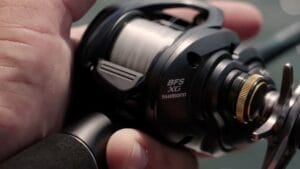
Discover how the Shimano Curado BFS brings finesse baitcasting to the U.S. market, offering ultralight lure performance with baitcaster precision. After months of testing on top Alabama fisheries, this reel proved to be a game-changer for technical anglers. Curious if it’s right for your setup? Read the full review to find out.

Shimano Vanford FA Spinning Reel Review
Positioned as the spiritual descendent of the legendary CI4+ Stradic and the evolution of the previous Vanford, this reel isn’t just an update—it’s a complete reimagining of what a finesse-focused spinning reel can be.
Daiwa Exceler LT Spinning Reel Review
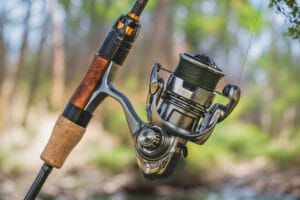
The Daiwa Exceler LT spinning reel combines premium features with mid-range pricing, offering anglers a lightweight design, smooth ATD drag system, and versatile 6.2:1 gear ratio. Our extensive field testing reveals exceptional value for finesse fishing techniques.